Fermentation Managers’ Checklist for Tracking Amino Nitrogen Trends Without Overreacting to One Batch
Amino nitrogen is one of the signals fermentation managers watch closely because it sits near the center of soy sauce quality: umami depth, protein breakdown, maturation progress, and the way a moromi batch is likely to behave downstream. But one low or high result should not immediately trigger a recipe change, enzyme change, salt correction, or schedule reset.
In a working soy sauce brewery, the better question is not, “What happened to this batch?” It is, “Does this result belong to a real trend, a normal process wobble, or a sampling and handling artifact?”
This checklist is built for plant teams that need calm, repeatable decisions. It supports fermentation managers, QC leads, and production supervisors who are tracking amino nitrogen alongside flavor, viscosity, fermentation time, filtration behavior, and batch-to-batch control.
Moromi Pulse works as an enzyme supplier for soy sauce fermentation with a practical view of brewery constraints: traditional quality targets, tank availability, koji variability, brine discipline, and the need to improve consistency without making the process feel over-engineered.
1. Start with the trend line, not the single point
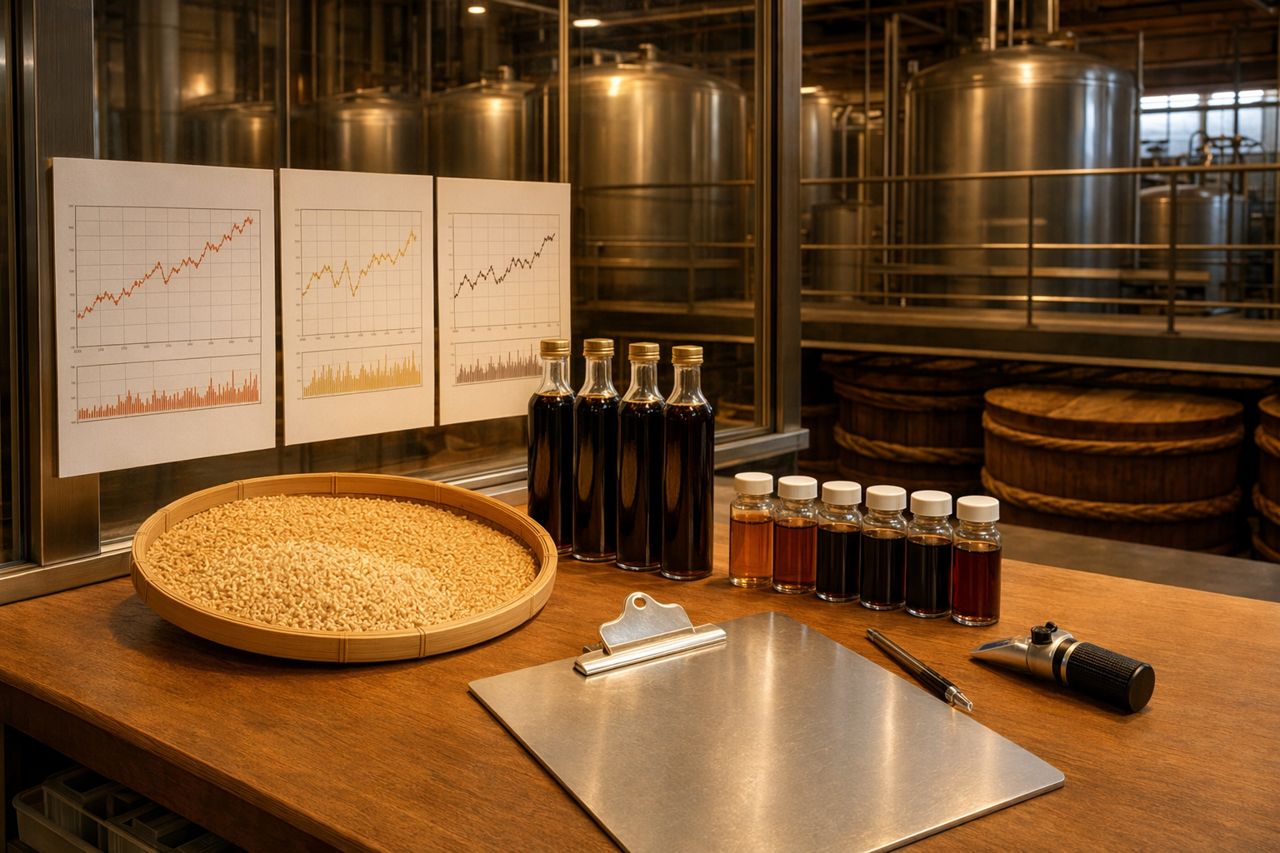
A single amino nitrogen result can look dramatic when viewed in isolation. Before changing the process, place the number back into its batch history.
Check before reacting
- Compare the result with the same fermentation age from recent comparable batches.
- Separate seasonal comparisons from year-round averages.
- Mark any known process events on the trend line: koji changes, raw material transitions, salt adjustment, tank transfer, agitation change, or temperature deviation.
- Look for direction and persistence, not just distance from the target.
Plant-floor interpretation
A one-batch dip may be normal variation. A slow drift across several batches is more likely to reflect a process condition that deserves review. A sharp shift after a known change may point to a specific cause, but it still needs confirmation against sensory, viscosity, and filtration observations.
The goal is not to ignore outliers. The goal is to avoid building a new process around one batch that may not represent the brewery.
2. Confirm the batch identity and comparison group
Amino nitrogen trends become misleading when unlike batches are compared as if they were the same.
Group batches by practical similarity
- Product type and target flavor profile
- Raw soybean and wheat lot family
- Koji preparation pattern
- Salt level and brine addition practice
- Fermentation vessel type and fill level
- Fermentation age at sampling
- Agitation or mixing history
- Pressing and filtration pathway
Why this matters
A batch intended for a lighter profile, a shorter maturation window, or a different downstream blending role should not be judged against the same trend band as a long-aged, full-bodied product. If comparison groups are too broad, the data can push the team toward unnecessary corrections.
3. Check sampling consistency before process correction
Many amino nitrogen arguments begin with a number and end with a process change. A disciplined brewery inserts one step in between: sample confidence.
Review sample handling discipline
- Was the sample taken from the usual tank location?
- Was the moromi mixed consistently before sampling?
- Was the sample timing aligned with the normal QC schedule?
- Was the sample exposed to unusual delay, heat, dilution, or contamination risk?
- Was the same preparation routine used as recent comparable batches?
What to do with uncertainty
If the sample path is questionable, do not treat the result as a confirmed fermentation signal. Flag it, resample according to internal procedure, and keep the production conversation open until the repeated result fits the broader picture.
This is especially important in moromi, where solids distribution, viscosity, and local concentration gradients can affect how representative a single draw feels to the team.
4. Read amino nitrogen beside viscosity, aroma, and filtration behavior
Amino nitrogen does not manage a brewery by itself. It should be interpreted with the behaviors operators can see, smell, and feel.
Pair the number with operational signals
- Moromi viscosity and ease of mixing
- Aroma development and balance of savory, roasted, alcoholic, and acidic notes
- Pressing behavior and cake formation
- Filtration load and clarity trend
- Color development in inspection glass
- Fermentation pace relative to the planned maturation window
Practical interpretation examples
- Amino nitrogen lower than expected, viscosity normal, aroma developing well: monitor before changing dosage or schedule.
- Amino nitrogen lower than expected, moromi remains heavy, filtration outlook worsening: investigate protein breakdown, raw material condition, koji performance, and enzyme support strategy.
- Amino nitrogen higher than expected, aroma clean, filtration stable: confirm trend before shortening fermentation.
- Amino nitrogen higher than expected with harsh or unbalanced sensory notes: review maturation balance rather than chasing nitrogen alone.
Strong soy sauce quality comes from alignment, not from maximizing one signal.
5. Separate raw material variation from process drift
Soy sauce breweries work with agricultural inputs. Protein quality, wheat roast character, koji behavior, and moisture patterns can all move the amino nitrogen trend without indicating operator error.
Ask these questions
- Did the soybean or wheat lot change near the trend shift?
- Was koji growth visually different from the previous baseline?
- Did the brewery observe changes in mash texture after brine addition?
- Were seasonal temperature or humidity conditions unusual during preparation?
- Did the fermentation team change mixing, holding, or transfer timing?
Decision discipline
If the likely driver is raw material variation, the response should be measured. Adjusting enzyme strategy, fermentation time, or mash handling may be appropriate, but the change should be documented and evaluated against multiple batches.
A stable brewery does not need a rigid process. It needs controlled flexibility.
6. Use enzyme changes as controlled trials, not emergency switches
Enzymes can support protein breakdown, texture management, and fermentation consistency, but they should be handled with dosage discipline. An abrupt change made after one unusual batch can create more noise than the original issue.
Good enzyme trial practice
- Define the target: amino nitrogen progression, viscosity reduction, filtration improvement, or fermentation time control.
- Keep the comparison batch as close as practical.
- Avoid changing multiple variables at once.
- Record addition timing, mixing conditions, temperature context, and batch age.
- Compare both QC trends and sensory fit.
- Review downstream behavior before declaring success.
What Moromi Pulse looks for
When supporting a brewery, Moromi Pulse focuses on the operating question: where is the constraint? Some breweries need stronger nitrogen release without losing traditional flavor depth. Others need more predictable mash viscosity or cleaner filtration behavior. The right enzyme approach depends on the actual bottleneck, not just the latest amino nitrogen result.
7. Build a simple review cadence
Amino nitrogen control improves when review is routine, not emotional. Create a short meeting rhythm that keeps QC, fermentation, and production aligned.
Suggested weekly review structure
- Review current batches by fermentation age.
- Highlight only results outside the normal trend band.
- Attach known process events to those batches.
- Compare sensory and viscosity notes.
- Flag filtration or pressing risk early.
- Decide whether to monitor, resample, adjust, or trial.
- Record the decision and the reason.
Why it works
The cadence prevents one department from owning the number alone. QC provides the trend, fermentation provides the context, and production provides the impact on throughput and scheduling.
8. Decision tree: monitor, verify, adjust, or trial
Use a simple decision tree before changing the process.
Monitor
Choose this path when the batch is slightly outside expectation but sensory, viscosity, and downstream indicators remain aligned.
Verify
Choose this path when the result conflicts with plant observations or sampling confidence is weak.
Adjust
Choose this path when a confirmed trend is affecting flavor consistency, maturation timing, viscosity, or filtration behavior.
Trial
Choose this path when the brewery sees a repeated constraint and wants a controlled way to evaluate enzyme support without disrupting traditional quality standards.
9. What to document for supplier support
If you are asking an enzyme supplier to help interpret amino nitrogen trends, prepare a clear process snapshot. This allows the conversation to move quickly from generic advice to practical options.
Useful information to share
- Product style and target flavor profile
- Typical fermentation timeline
- Where the amino nitrogen trend is drifting
- Moromi viscosity observations
- Filtration or pressing constraints
- Koji and raw material notes
- Current enzyme use, if any
- Addition point and mixing constraints
- Recent process changes or seasonal effects
- What success would look like to the brewery
Moromi Pulse uses this information to recommend a controlled evaluation path rather than a broad, one-size-fits-all adjustment.
10. The calm rule: do not let one number rewrite the brewery
Amino nitrogen matters. It deserves attention. But the best fermentation teams protect their process from overreaction.
A good trend review should answer four questions:
- Is the result real?
- Is it part of a pattern?
- Does it affect flavor, texture, time, or filtration?
- What is the smallest controlled change that can confirm improvement?
That discipline keeps traditional soy sauce quality intact while giving the brewery room to improve consistency.
Request a quote
If your brewery is reviewing amino nitrogen drift, mash viscosity, fermentation time, or filtration behavior, Moromi Pulse can help you evaluate enzyme options with plant-floor discipline.
Use the on-site request a quote form to share your fermentation constraints, target product style, and current process goals. We will respond with a practical starting point for a controlled brewery evaluation.