What Export-Oriented Soy Sauce Plants Document for Consistent Flavor and Batch Repeatability
For export-oriented soy sauce breweries, consistency is not a slogan. It is a controlled record of how flavor, color, aroma, nitrogen release, viscosity, filtration behavior, and finished-product stability are produced again and again under real plant conditions.
International buyers expect the sensory profile they approved to arrive unchanged after shipping, warehousing, and distribution. That puts pressure on fermentation managers to manage more than a recipe. They must manage documentation, traceability, controlled deviations, supplier inputs, and batch learning.
Moromi Pulse works as an enzyme supplier for soy sauce fermentation with this operating reality in mind: traditional quality standards remain important, but export growth requires disciplined records that make each batch explainable.
Why documentation becomes a commercial issue in export programs
A domestic customer may tolerate small seasonal differences if the brand story supports them. Export buyers usually operate differently. Importers, distributors, private-label customers, and food manufacturers want stable flavor performance across purchase orders.
That means the brewery needs records that can answer practical questions:
- Why did this batch filter faster than the previous one?
- Was the umami profile driven by koji condition, moromi temperature, enzyme timing, or maturation length?
- Did viscosity change because of raw material variation or process handling?
- Which supplier lot, tank, operator shift, and addition sequence were involved?
- Can the same sensory result be repeated for the next shipment window?
Good documentation protects the brewery from guesswork. It also gives commercial teams more confidence when committing to export contracts, private-label timelines, and customer specifications.
The batch file should begin before fermentation
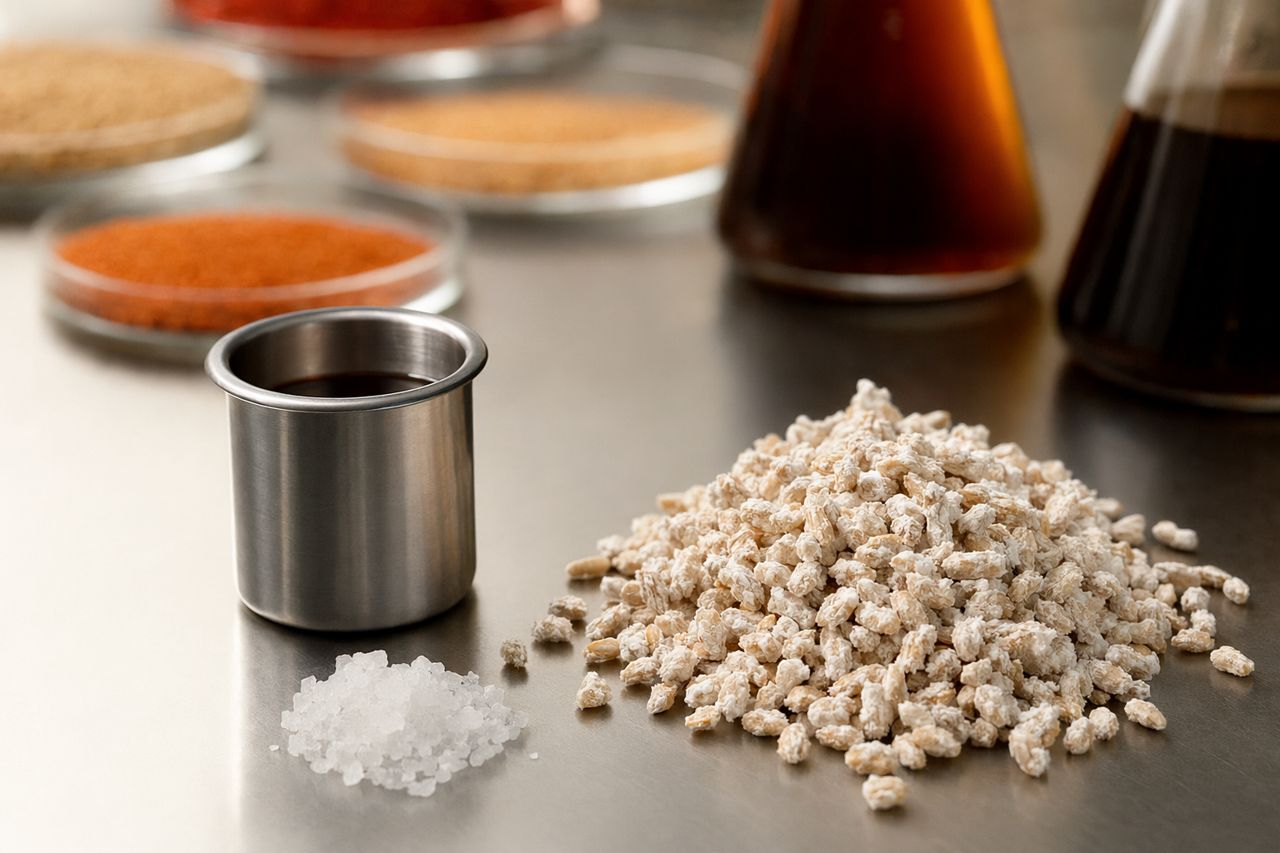
Repeatability starts before the moromi tank is filled. Export-oriented plants benefit from a batch file that captures incoming material condition, pre-process decisions, and the state of the koji going into the mash.
Raw material and koji records to retain
At minimum, breweries should document:
- Soybean and wheat lot identification
- Supplier and delivery date
- Storage condition before use
- Steaming, roasting, or crushing observations
- Koji appearance, aroma, and coverage uniformity
- Koji temperature history and handling notes
- Any visible dryness, clumping, heat stress, or uneven growth
These records help explain downstream behavior. A moromi that thickens early, releases nitrogen slowly, or develops an uneven aroma profile often has upstream signals that were visible before brine addition.
Brine, salinity, and tank conditions need disciplined traceability
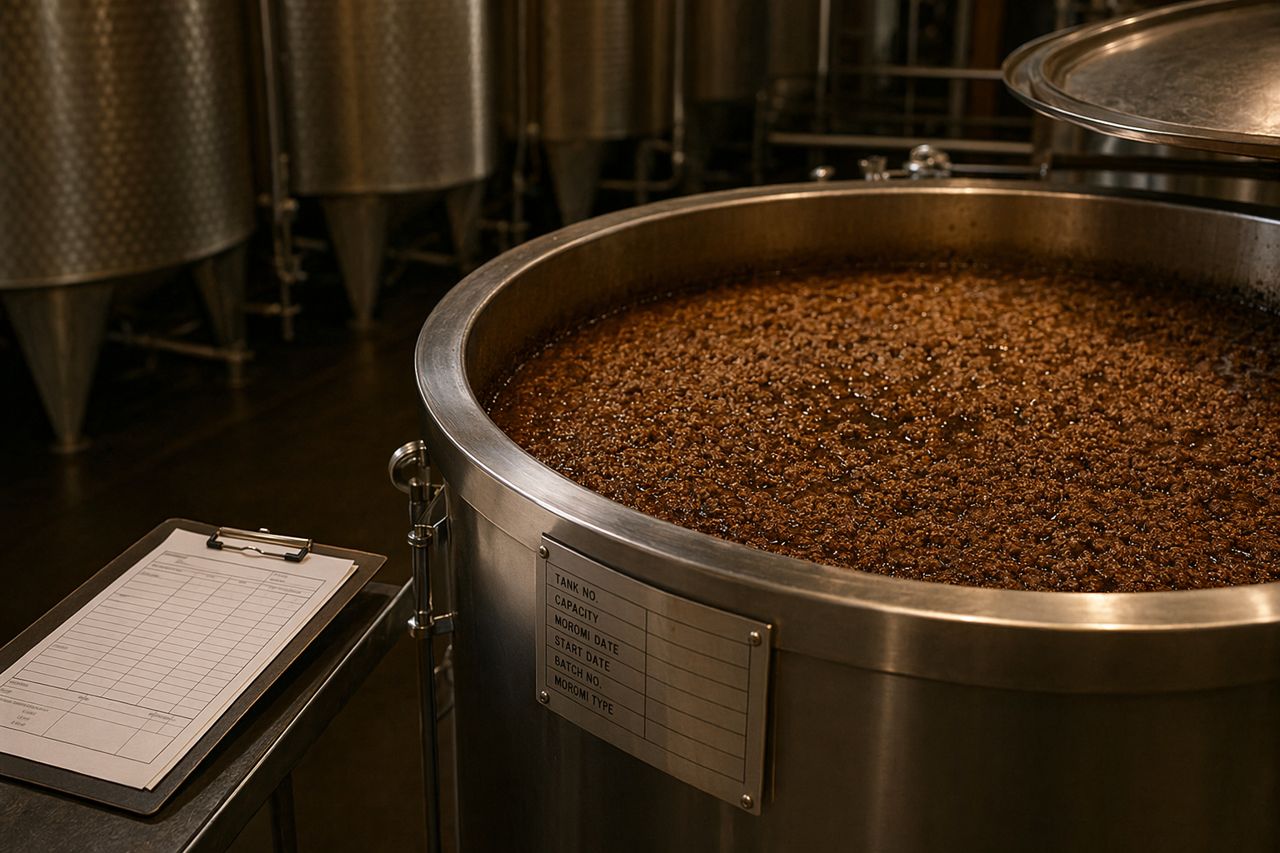
Salt concentration and tank environment shape microbial activity, enzyme performance, protein breakdown, aroma development, and preservation behavior. In export production, the brewery should document not only the target setting, but the actual observed condition.
Useful fermentation records include:
- Brine preparation date and lot reference
- Salinity confirmation according to the plant’s internal method
- Tank number, fill volume, and headspace condition
- Moromi temperature trend
- Agitation or mixing schedule
- Surface condition and visual observations
- Any deviation from the planned fermentation profile
The value is not paperwork for its own sake. These records allow the fermentation team to compare tank behavior and identify whether flavor differences are process-driven, material-driven, or supplier-input-driven.
Enzyme use should be recorded as a controlled processing decision
Enzyme-assisted soy sauce fermentation can support controlled protein breakdown, improved nitrogen release, viscosity management, and more predictable mash behavior. But enzymes should be handled with the same discipline as any critical processing aid.
For each enzyme addition, document:
- Product name and supplier lot code
- Receiving date and storage condition
- Internal approval status before use
- Dosage decision and responsible approver
- Addition point in the process
- Dilution or dispersion procedure, if used
- Mixing confirmation after addition
- Time between addition and the next process step
- Tank response after addition
This is where an experienced enzyme supplier for soy sauce fermentation can be valuable. The supplier should help the plant connect enzyme selection and dosing discipline with practical brewery outcomes: flavor consistency, controlled nitrogen release, manageable mash viscosity, cleaner downstream separation, and repeatable batch performance.
Sensory records should be structured, not anecdotal
Soy sauce quality is still judged by people. Export repeatability depends on keeping those judgments consistent, comparable, and searchable.
A useful sensory record should capture:
- Evaluation date and batch reference
- Panel members or trained evaluators
- Aroma notes: roasted, fermented, alcoholic, yeasty, acidic, sulfurous, or clean
- Taste notes: salt balance, umami depth, sweetness, bitterness, harshness, aftertaste
- Color and clarity observations
- Comparison to approved export standard
- Any required adjustment or blending decision
Avoid vague comments such as “good,” “acceptable,” or “slightly different” unless they are tied to a defined internal standard. Export customers buy continuity. Sensory language should be consistent enough to support that continuity.
Track filtration behavior as a batch repeatability signal
Filtration performance is often treated as a production issue, but it is also a fermentation signal. Moromi viscosity, suspended solids, protein breakdown, and polysaccharide behavior can all influence press load, flow stability, turbidity, and yield.
For export-oriented breweries, filtration records should include:
- Moromi age at pressing
- Pre-press viscosity observation or internal trend
- Press loading behavior
- Flow consistency during separation
- Turbidity or clarity trend after separation
- Hold time before clarification or heat treatment
- Any filter aid or process adjustment used
When filtration changes unexpectedly, the batch file should make it possible to look backward: koji condition, brine strength, temperature profile, enzyme timing, mixing pattern, and maturation length. The goal is not to assign blame. The goal is to make the next batch easier to control.
Build a deviation record that operators will actually use
A deviation record only works if the plant floor can complete it without friction. Fermentation managers should design forms that capture what matters while staying practical during production.
A useful deviation entry includes:
- What happened
- When it was observed
- Who observed it
- Which tank, batch, ingredient lot, or enzyme lot was involved
- What immediate action was taken
- Who approved the action
- What result was observed afterward
- Whether the issue should affect future batch planning
For soy sauce breweries, common deviation categories may include unexpected moromi thickening, slow nitrogen release trend, uneven aroma development, delayed filtration, color drift, excessive bitterness, or a difference from the approved export sensory profile.
Batch comparison is where records become operational intelligence
Documentation has value only when the brewery reviews it. Export programs should schedule routine batch comparison, especially across production seasons, raw material changes, new export specifications, and enzyme trials.
A strong review compares:
- Approved standard batch versus current batch
- Domestic batch versus export batch
- New raw material lot versus previous lot
- New enzyme lot versus previous enzyme lot
- Planned fermentation profile versus actual tank history
- Sensory outcome versus processing conditions
- Filtration outcome versus moromi behavior
Over time, the brewery can identify which variables have the strongest influence on flavor, viscosity, filtration, and shipping stability. That knowledge supports better specifications, better purchasing decisions, and better production scheduling.
What export buyers may ask for
Different markets and customers have different documentation expectations. Still, many export-oriented soy sauce plants prepare records that can support:
- Ingredient and processing aid traceability
- Batch identification and production date
- Allergen and material declarations
- Finished-product specification alignment
- Sensory approval history
- Corrective action records
- Change-control notes for formulation or process changes
- Supplier documentation for critical inputs
When enzymes are part of the fermentation strategy, supplier identity, lot traceability, storage condition, and internal use approval should be easy to retrieve. This helps quality teams respond quickly if a customer asks how consistency is controlled.
Where Moromi Pulse fits
Moromi Pulse supplies enzyme solutions for soy sauce breweries that need controlled fermentation support without losing sight of traditional quality expectations. Our work is practical: help plants evaluate enzyme fit, define addition discipline, monitor process impact, and connect batch records to brewery outcomes.
We focus on buyer-relevant value:
- More consistent flavor development across batches
- Controlled nitrogen release during fermentation
- Improved visibility into mash viscosity and handling behavior
- Better alignment between enzyme use and filtration performance
- Traceable supplier input for export documentation
- Process support that respects existing brewery methods
For export-oriented producers, the advantage is not simply using an enzyme. The advantage is using the right enzyme within a documented, repeatable fermentation system.
Practical checklist for the next export batch review
Before releasing the next export batch, review whether the batch file can answer these questions:
- Are all raw material, koji, brine, tank, and enzyme lots traceable?
- Were fermentation conditions recorded at the points that matter?
- Is the sensory result compared against the approved export profile?
- Are filtration behavior and viscosity observations linked to the batch history?
- Were deviations documented with corrective actions and outcomes?
- Can the production team explain why this batch matched, exceeded, or drifted from the target?
- Are lessons from this batch available before the next batch begins?
If the answer is yes, the brewery is not only making soy sauce. It is building a repeatable export system.
Request a quote
If your soy sauce brewery is reviewing enzyme support for export consistency, batch repeatability, nitrogen release, mash viscosity, or filtration behavior, contact Moromi Pulse through the on-site request a quote form. Share your process goals, current fermentation constraints, and target product style, and our team will help identify a practical enzyme solution for your plant.